Full-Stack E-Commerce website with MERN
Artisan Bazaar is a full-stack e-commerce website designed to connect local artisans with digital shoppers.
Preview Gallery
6 media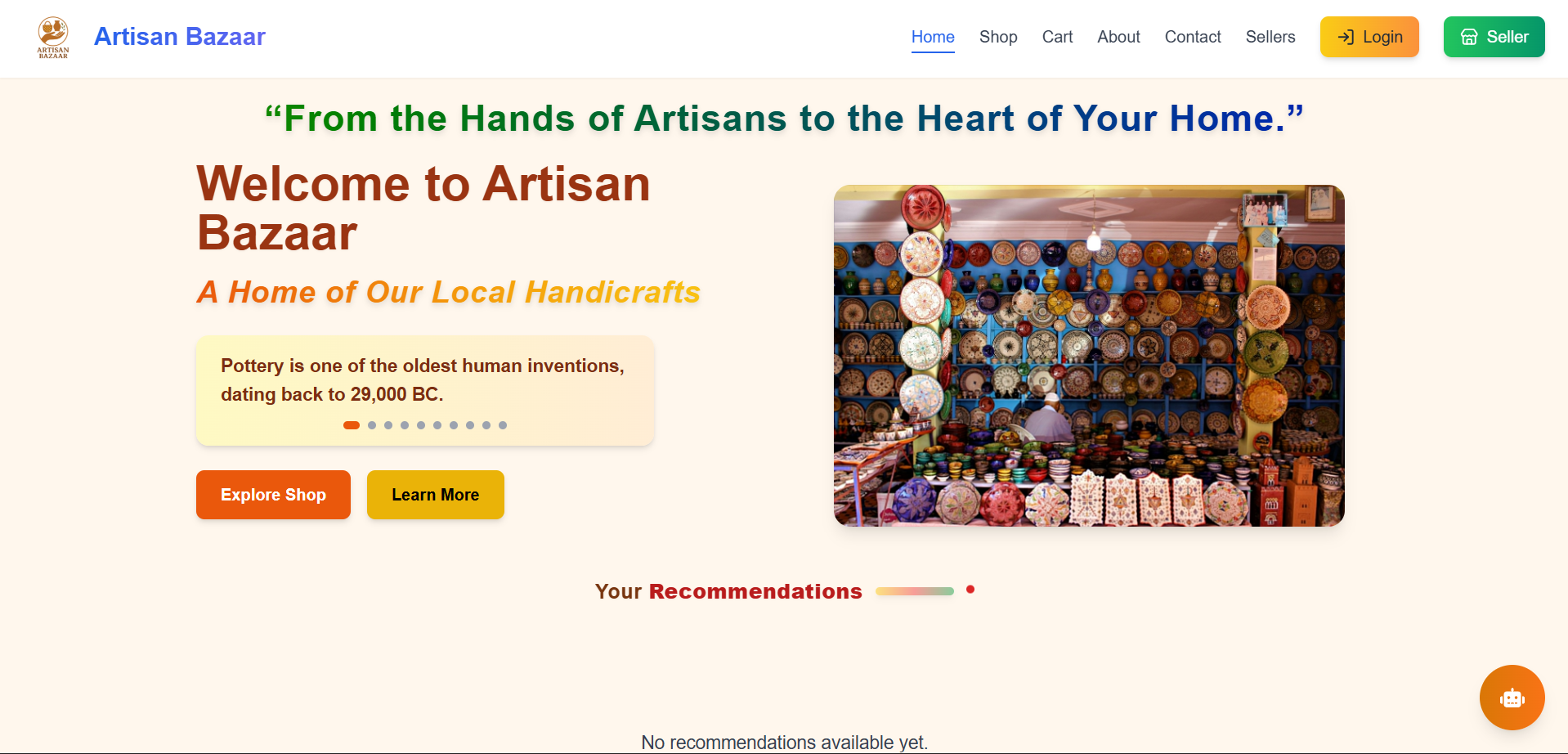
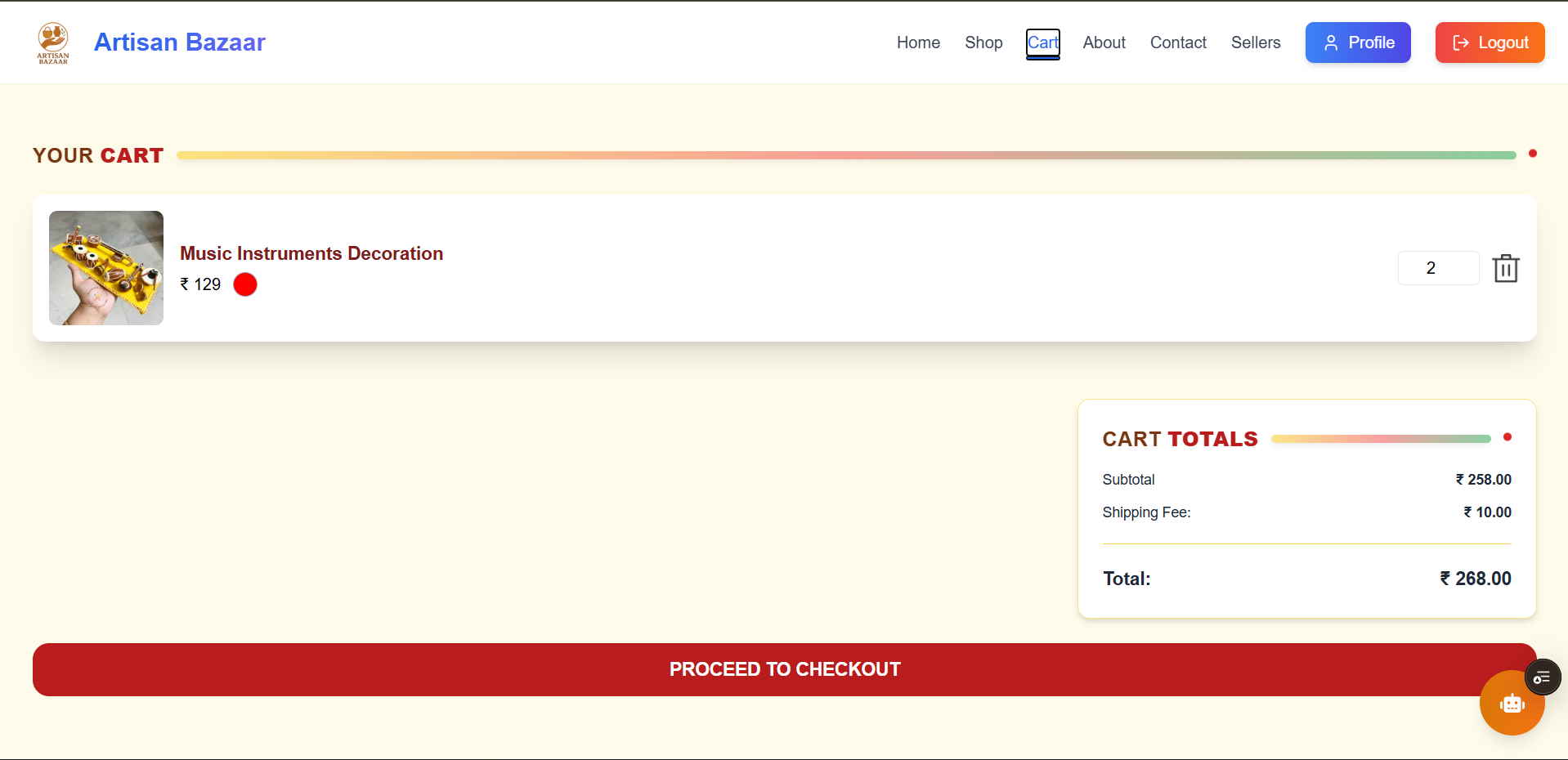
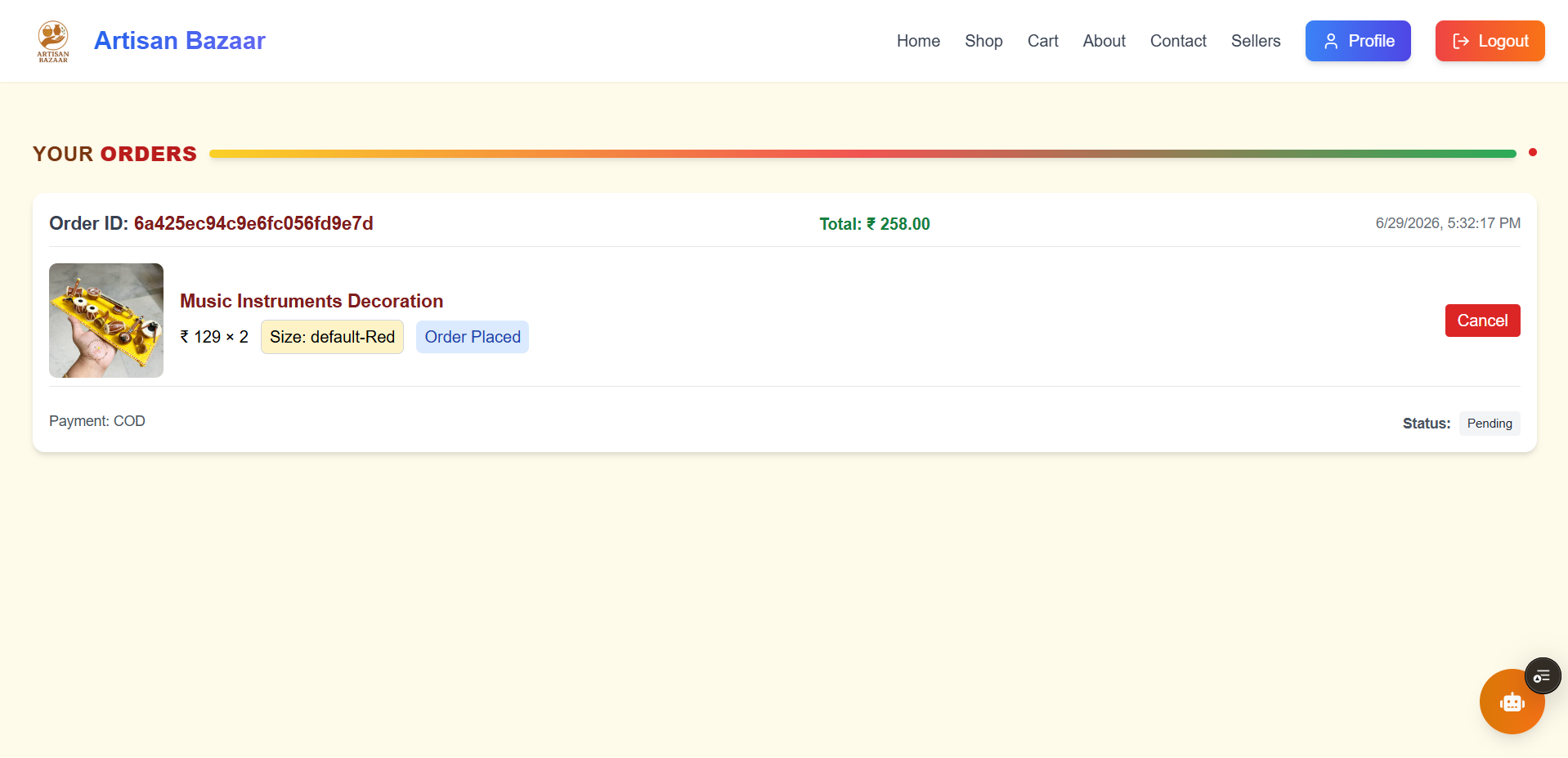
Technologies & Skills
Tags
Limited time offer
In this price pakage the buyer will get the source code and 2 future updates and the user have to pay additional for all the resources required for Development. (i.e Database, Stripe APIs and etc).
What's Included
Support & Customization
Customization can be done as per the buyer required and the price will be charged based on the customization.
Resource Links
Purchase this project to unlock source and premium resources. Document/report remain secure preview-based on this page.
Artisan Bazaar is a full-stack e-commerce marketplace built using the MERN stack (MongoDB, Express.js, React, and Node.js). The platform is designed to connect traditional local craftsmen directly with digital buyers, allowing artisans to showcase and sell their unique handmade products online. By bridging the gap between local heritage and modern retail, the website provides a seamless shopping experience while empowering creators with the tools they need to run a digital business.
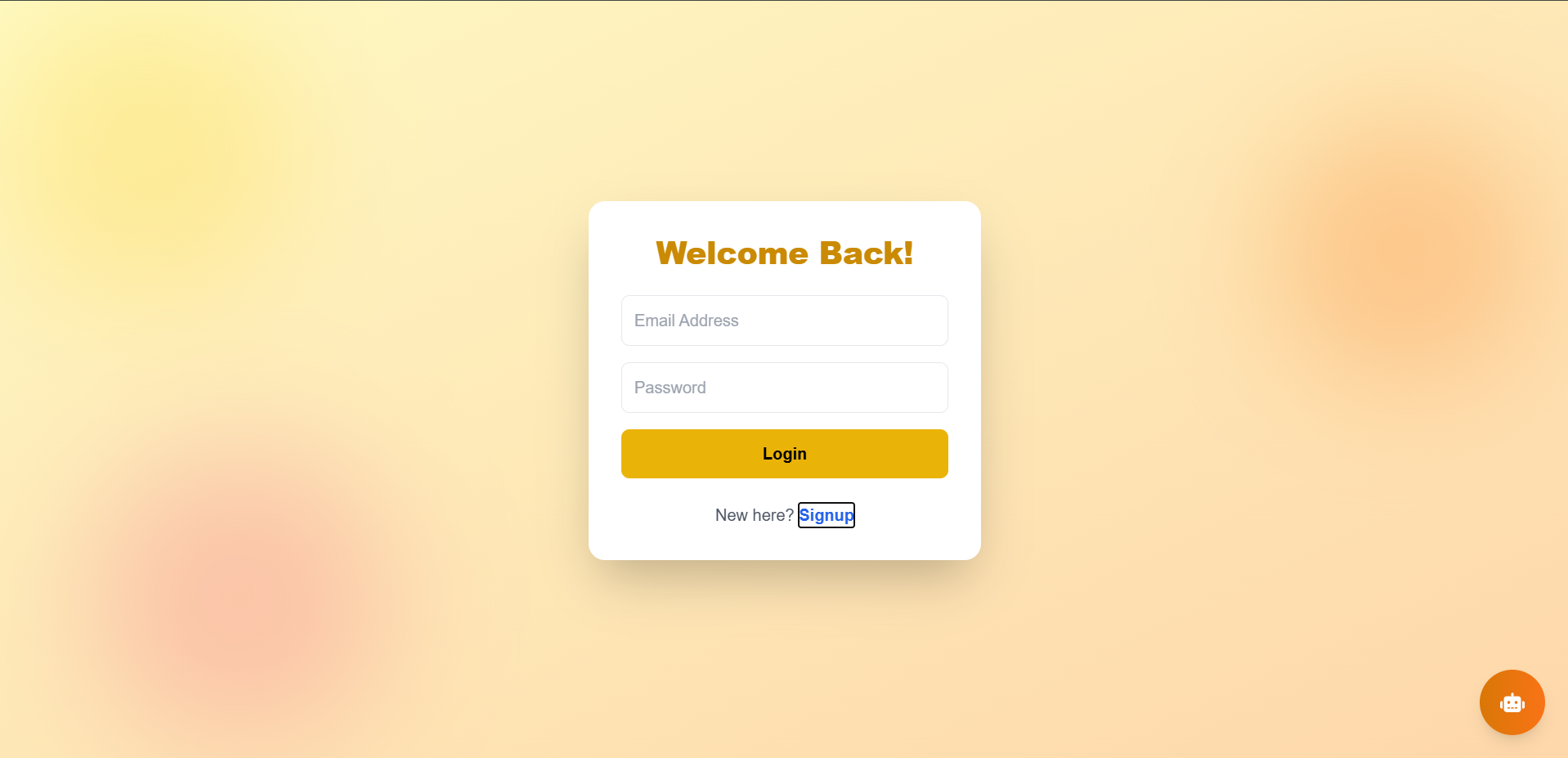
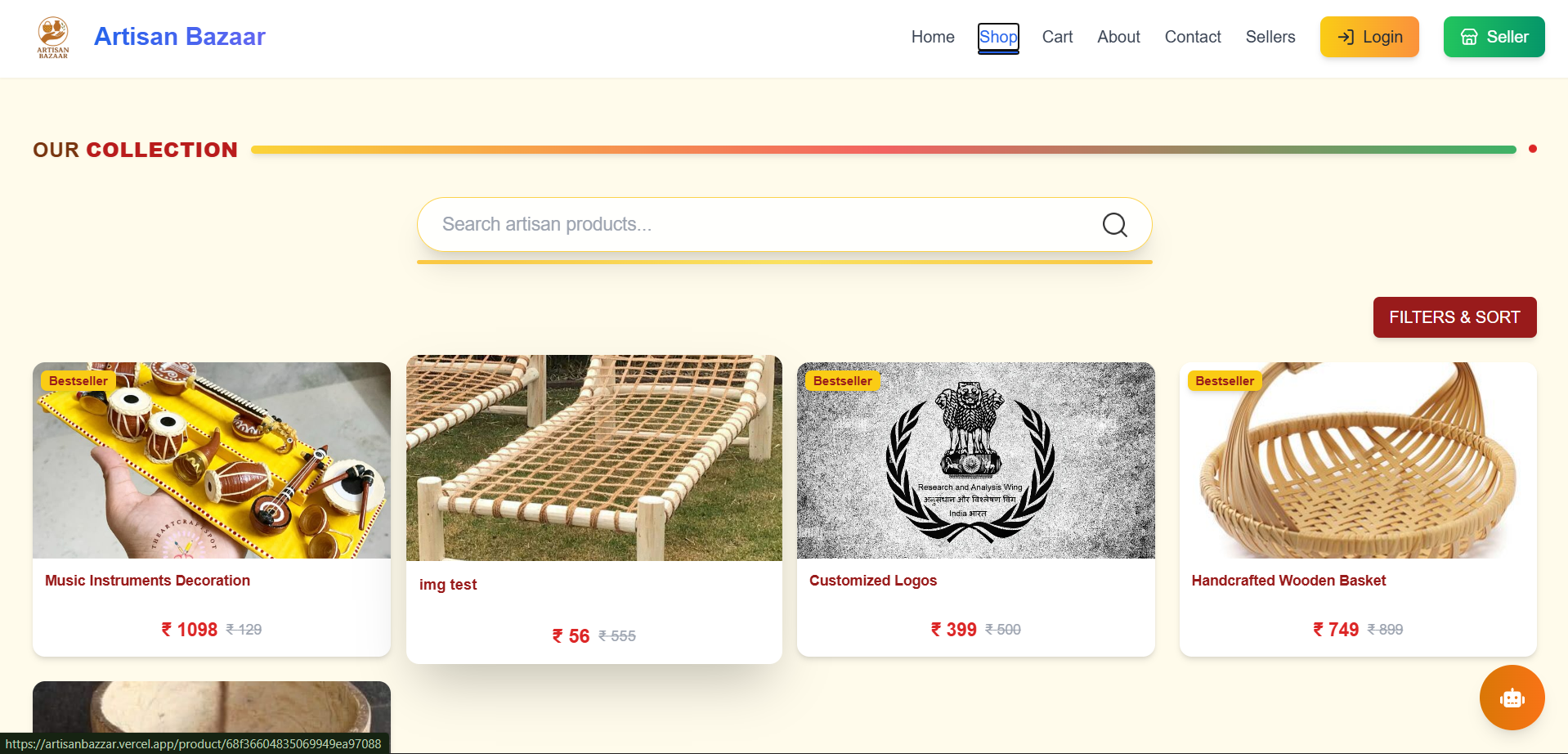
On the frontend, the application features a highly responsive and interactive user interface built with React.js, allowing customers to easily filter products by category or price, manage a dynamic shopping cart, and navigate a secure checkout process. To protect user data and maintain marketplace trust, the platform includes a secure authentication system with completely separate dashboards for buyers, sellers, and system administrators.
The backend architecture, powered by Node.js and Express.js, relies on a collection of clean RESTful APIs to manage data flow smoothly. Artisans can use their specialized dashboard to handle essential inventory tasks—including uploading new items, updating stock counts, and tracking their total earnings. All product details, user credentials, and transaction histories are stored securely in a flexible MongoDB database, showcasing a complete implementation of secure data management and real-world e-commerce workflows.
Future Enhancements
Known Issues
Installation
Part 1: Backend Server Setup
- Clone the Repository: Open your computer's terminal or command prompt window and download the project code files from your online repository to your local system.
- Navigate to the Project Folder: Move your terminal path directly into the main project root folder that was just created.
- Enter the Backend Directory: Change your folder directory to go inside the dedicated backend folder.
- Install Backend Dependencies: Run the package installer command to automatically download and configure all necessary Node.js server packages and libraries.
- Create the Environment File: In the root of your backend folder, create a new text file and save it exactly under the name
.env. - Configure Environment Variables: Open the newly created environment file in a text editor and define your variables by entering the server port number, your MongoDB database connection string, and a secure text key for user authentication tokens.
- Start the API Server: Run the start script to initialize your database connection and launch the server application. Keep this terminal window open so the backend stays active.
Part 2: Frontend Client Setup
- Open a New Terminal Window: Launch a completely fresh, separate terminal or command prompt window without closing the one running your backend server.
- Enter the Frontend Directory: Navigate your new terminal window into the main project folder, and then go straight into the frontend workspace folder.
- Install Frontend Dependencies: Run the package installer command within this folder to download all required user interface modules, React layouts, and visual design libraries.
- Launch the User Interface: Execute the project development script to compile the frontend code and launch your interactive web application. Your default web browser will automatically open to display the marketplace home screen.
Usage
A. The Buyer Workflow (Shopping & Purchasing)
- How They Interact: A buyer lands on the homepage, browses unique crafts, and uses the search or filter bars to find specific items.
- The Workflow:
- The buyer registers an account or logs in.
- They browse categories (e.g., pottery, textiles, woodwork) and apply filters like price range or artisan rating.
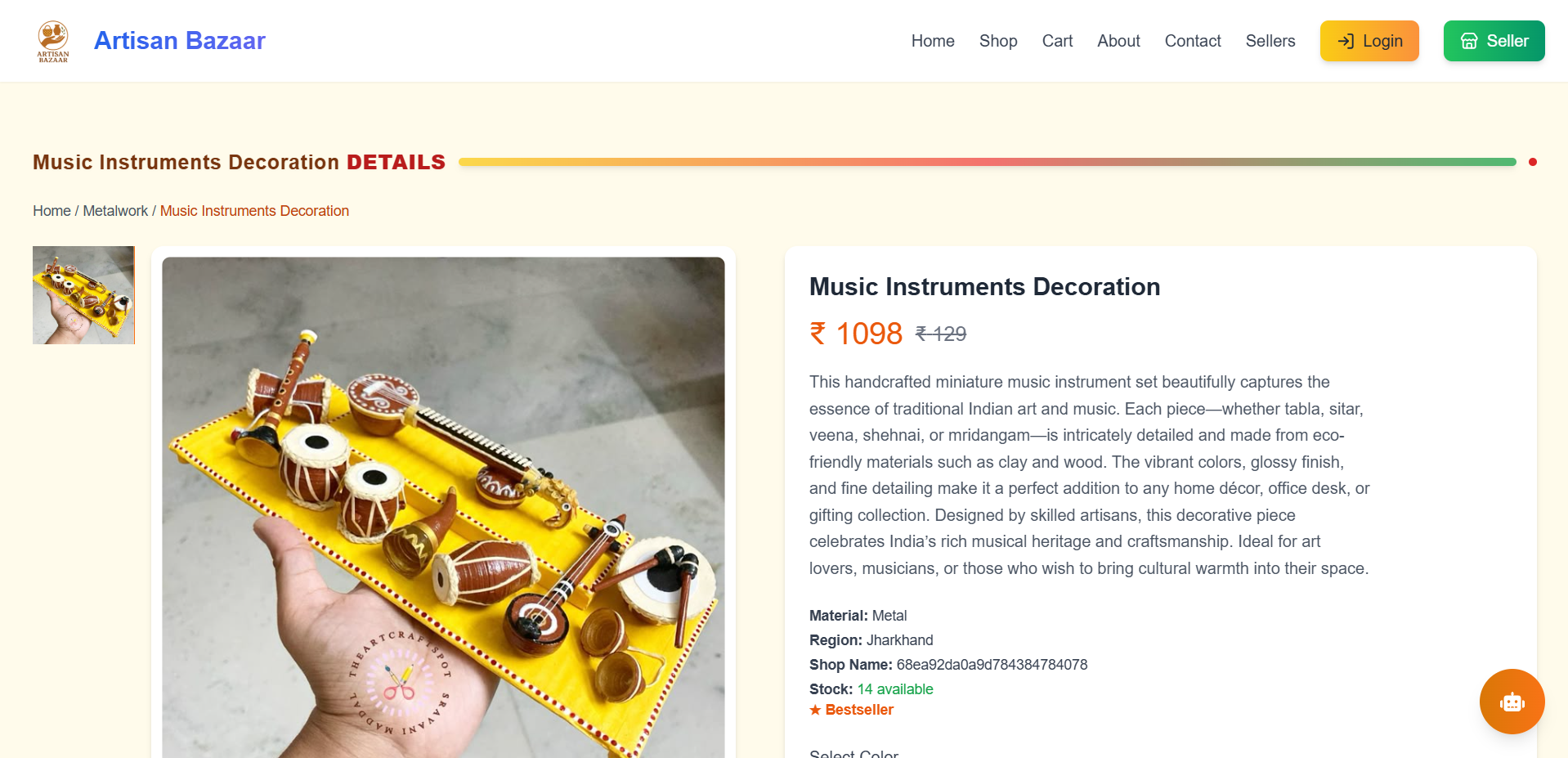
- They click a product to see details, add items to their dynamic shopping cart, and adjust quantities.
- They proceed to the checkout screen to fill in shipping details and submit the order.
B. The Artisan Workflow (Store & Inventory Management)
- How They Interact: Artisans access a dedicated seller dashboard to manage their digital storefront without needing any technical or coding knowledge.
- The Workflow:
- The artisan logs into their specialized account.
- To add a new product, they fill out a form with the item's title, price, description, available stock, and upload an image.
- They use the dashboard table to update prices, restock items, or delete products they no longer make.
- They view an earnings summary panel to monitor their total sales performance.
System Requirements
Backend Server & API Hosting (Node.js & Express.js)
- Operating System: Linux (Ubuntu 20.04 LTS or newer recommended) or Windows Server.
- Processor (CPU): Minimum 1 vCPU (Virtual CPU).
- Memory (RAM): 1 GB RAM minimum (2 GB recommended if handling heavy traffic or concurrent image uploads).
- Runtime: Node.js v18.x or v20.x (LTS versions).
Database Server (MongoDB)
- Hosting Choice: MongoDB Atlas (Cloud) or a self-hosted instance.
- Storage Space: 512 MB minimum (free tier) for testing; 10 GB+ recommended for production to store high-quality artisan product images and user data.
- RAM: 2 GB+ RAM dedicated to the database for smooth query execution and indexing.
Frontend Hosting (React.js)
- Hosting Platform: Vercel, Netlify, or AWS S3 (since React builds into static HTML/JS/CSS files).
- Requirements: Virtually zero server overhead because it serves static assets directly to the user's browser.
Slides Open in New Tab
For better readability, slides are opened directly. Documents remain preview-only with secure backend rendering.
Showing preview pages only. Purchase for full access to all pages and complete source package.
Login for Full AccessNo Q&A available yet
Be the first to ask a question!
Ask a Question
Customer Reviews
Write Your Review
No reviews yet
Be the first to review this project!
Similar Projects
You might also be interested in these projects
 website Development
Social Platform
AI-powered social platform for language learning with chat, video calls, gamification, partner matching, and Stripe subscriptions.
 website Development
Full-Stack Food Delivery webapp
A modern full-stack delivery application where users can order items from nearby shops, shop owners can manage orders, and delivery partners can track
 website Development
FarmSetu – Microservices Digital Agri Marketplace
A microservices-based platform enabling real-time crop auctions, farmer insurance, and transparent agricultural trading with role-based access
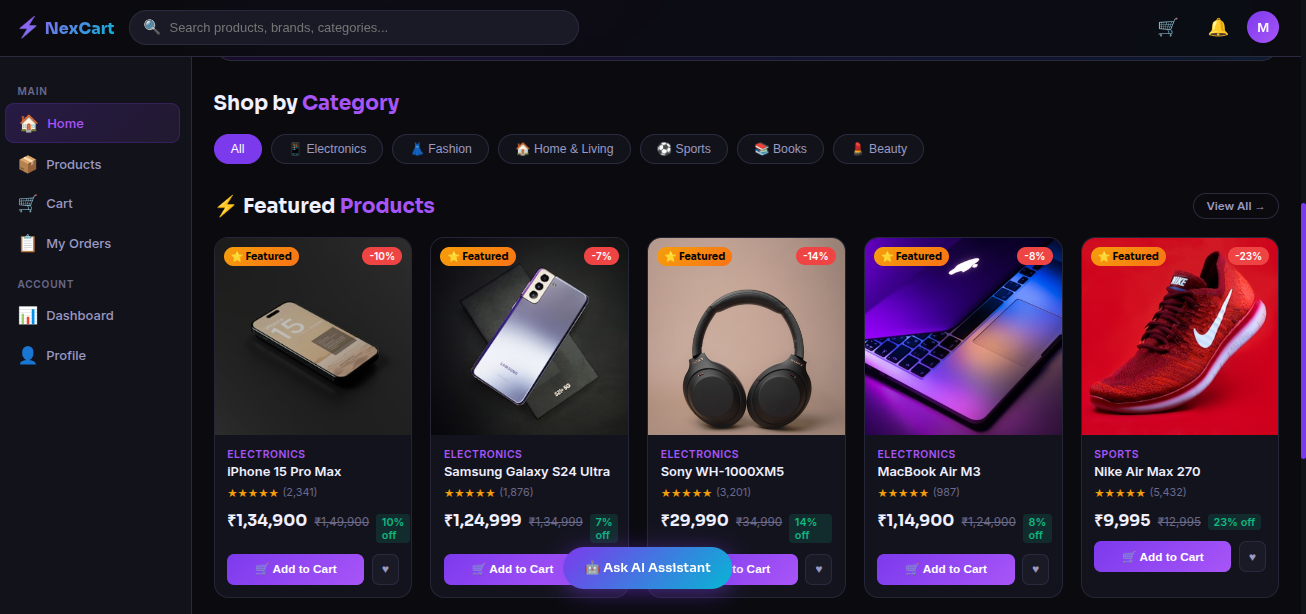 website Development
NexCart — Full-Stack E-Commerce Platform
🏗️ Architecture Backend (Django + SQLite3 + JWT) Authentication: JWT via djangorestfram